China Top CCD Inspection Machine Manufacturers?
China has become a major manufacturing base for optical inspection equipment, including the Ccd Inspection Machine. Its supplier landscape covers semiconductor packaging, electronics assembly, glass, displays, and precision components. However, “top” should not mean the largest website or the lowest quotation.
SEMI reported that global semiconductor manufacturing equipment sales reached approximately $117.1 billion in 2024. China represented about $49.6 billion, making it the largest regional market that year. This figure does not measure CCD inspection machines directly. Still, it shows the scale of China’s equipment ecosystem and its strong demand for process-control technologies. Reports from Yole Group also emphasize the growing importance of image sensors, advanced packaging, and automated optical inspection in high-precision manufacturing.
Real performance is more practical than marketing language. A reliable supplier should demonstrate repeatable defect detection, stable illumination, suitable camera resolution, and clear calibration records. Ask for sample testing. Examine real images, not only brochures. Check whether the machine handles scratches, particles, missing components, edge defects, or dimensional errors under production speed.
Experience matters here. A factory may promise high accuracy, yet struggle with reflective surfaces or changing product colors. That gap deserves attention. Rankings can become outdated quickly. Some manufacturers excel at customized systems, while others provide stronger software, service networks, or integration support. This guide compares leading Chinese manufacturers through technology, inspection stability, application experience, after-sales response, and documented customer results. Where public information is incomplete, that limitation will be stated clearly. Reliability begins with honest comparison.
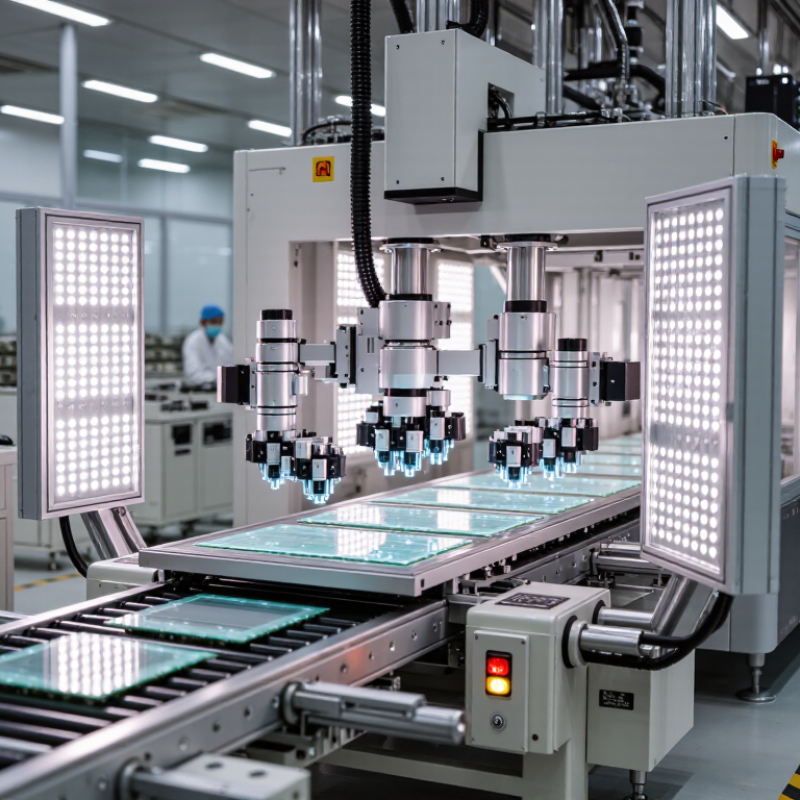
What Is a CCD Inspection Machine and How Does It Work?
A CCD inspection machine uses light, lenses, and a CCD sensor to examine products automatically. The sensor captures reflected or transmitted images as items move along a production line. Software then compares each image with preset standards. It can identify scratches, missing parts, stains, size errors, and uneven edges. The machine sends a signal when it detects a defect. A separate mechanism may remove the item or stop the line.
In practical production, image quality matters more than camera resolution alone. Stable lighting reduces shadows and false alarms. Correct lens selection controls viewing detail and inspection distance. Engineers also adjust exposure, contrast, tolerance limits, and conveyor speed. Chinese manufacturers often provide customized systems for packaging, electronics, textiles, and precision components. However, performance depends heavily on installation and testing. A machine that worked well in a showroom may struggle with dust, vibration, or changing materials. No system is perfect.
Tips: Test real samples before purchasing. Include good products and known defects. Check calibration tools, software records, service response, and operator training. Ask whether the system can handle product changes without frequent manual adjustment. Small lighting differences can create large inspection errors.
Key Features of China’s Leading CCD Inspection Machine Manufacturers
China’s leading CCD inspection machine manufacturers focus on stable imaging, practical integration, and measurable quality control. In factory evaluations, engineers often examine image clarity under changing light, vibration, and production speed. A reliable machine should detect tiny scratches, missing parts, color differences, and dimensional errors without slowing the line.
Key features include high-resolution CCD cameras, adjustable LED lighting, and precise optical lenses. Good manufacturers also provide intelligent software with defect libraries, real-time alerts, and clear inspection reports. Data traceability matters. Operators should be able to review images, inspection results, and rejected products later. Strong suppliers usually support calibration, operator training, spare parts, and software updates. Custom interfaces are valuable when a machine must connect with conveyors, robots, or existing production systems. However, performance claims still require testing. A sample may look perfect in a showroom but behave differently beside heat, dust, or reflective materials.
Tips: Test real samples before purchasing. Check detection accuracy at full production speed. Ask for false-rejection data, maintenance guidance, and response times. Do not judge a machine by camera pixels alone. Lighting design often decides the result. I have seen promising systems fail because their fixtures were unstable. That detail is easy to overlook.
Key Features of China’s Leading CCD Inspection Machine Manufacturers
The chart presents typical capability ranges commonly specified for industrial CCD inspection systems in China. Actual performance depends on the camera, lens, lighting, software, product geometry, and production-line conditions.
How to Choose the Right Chinese CCD Inspection Machine Manufacturer
How to Choose the Right Chinese CCD Inspection Machine Manufacturer
Choosing a Chinese CCD inspection machine manufacturer requires more than comparing prices. MarketsandMarkets’ 2024 Machine Vision Market report estimates the sector could grow from USD 12.3 billion in 2023 to USD 20.6 billion by 2028. This growth increases supplier choices, but also creates uneven technical quality. Request sample images, lighting tests, and defect-detection results using your actual products. A polished showroom video proves little.
Check the camera resolution, lens compatibility, inspection speed, software stability, and rejection accuracy. Ask for repeatability data under changing light, temperature, and product position. A reliable manufacturer should provide calibration records, factory acceptance procedures, and traceable quality documents. ISO 9001 certification supports process control, but it does not guarantee inspection performance. Test it yourself. I have seen impressive specifications fail during continuous production.
Mordor Intelligence reports that machine vision adoption is expanding across electronics, packaging, automotive, and pharmaceutical manufacturing. Therefore, select a supplier with experience in your material, surface finish, and defect size. Review installation records and speak with comparable users, where possible. Confirm spare-camera availability, remote support hours, software update policies, and operator training. Clarify response times in writing. A low purchase price may become expensive when engineers wait days for support. Some suppliers may overpromise. Independent acceptance testing remains essential.