
Blog
China Top 10 Electric Actuator Manufacturers?
Choosing China’s top 10 electric actuator manufacturers requires more than comparing factory websites or advertised prices. A reliable review must examine engineering depth, production consistency, application experience, and after-sales support. It should also consider thrust ratings, speed control, duty cycles, IP protection, backlash, noise, and operating temperature. A 24-volt actuator may appear suitable on paper, yet fail under continuous loads or dusty installation conditions.
Robotics authority Bruno Siciliano explains the core principle clearly: “Actuators are the muscles of a robot.” That idea also applies to industrial equipment, medical devices, agricultural machinery, and automated valves. The right electric actuator converts electrical commands into controlled, repeatable motion. Small differences matter. A loose gearbox, unstable limit switch, or delayed replacement part can stop an entire production line.
This guide evaluates ten Chinese manufacturers through practical criteria. These include product range, customization capability, testing procedures, certifications, export experience, and technical communication. Public information is useful, but it is not always complete. No ranking is perfect. Some companies publish impressive specifications without showing long-term test data. Others provide modest websites but deliver dependable engineering support. That contrast deserves attention.
Readers should treat this list as a starting point, not a final verdict. Request drawings, sample units, load-test records, and warranty terms before choosing a supplier. Ask how the actuator performs after thousands of cycles. Check the details. A trusted manufacturer should answer clearly, document limitations, and admit where its design may need improvement.
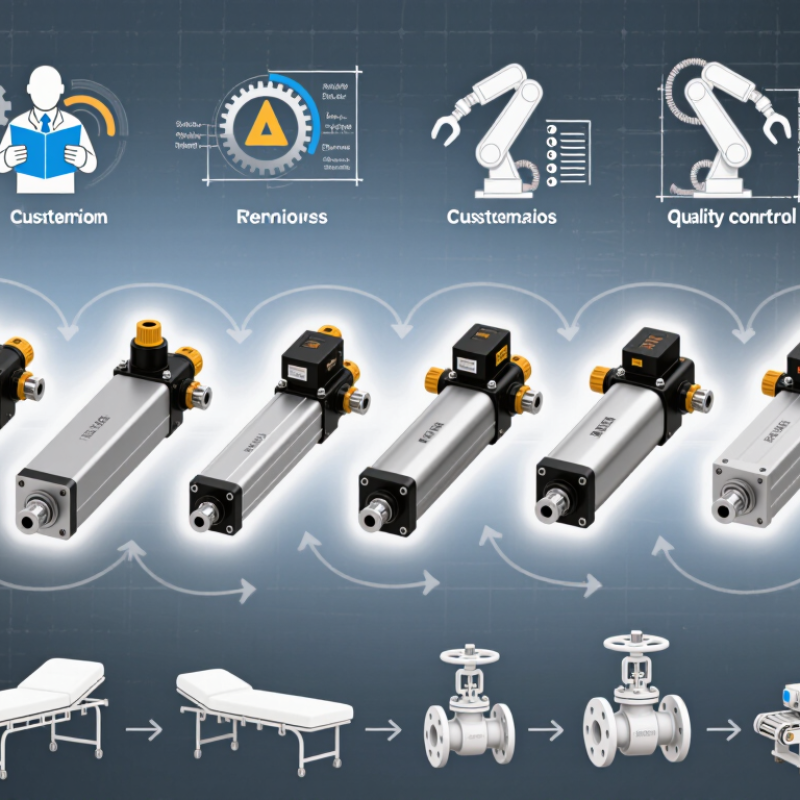
What Are Electric Actuators and How Are They Used?
Electric actuators convert electrical energy into controlled mechanical movement. A motor drives a screw, gear train, or rotary mechanism. This movement opens, closes, lifts, or positions equipment. In practical installations, they replace manual handles and many pneumatic systems. They work well where clean operation, accurate positioning, and repeatable control matter. A valve actuator may rotate a quarter-turn valve, while a linear actuator adjusts a damper or industrial slide.
Electric actuators appear in water treatment, building automation, energy systems, packaging lines, and process equipment. They can receive signals from switches, controllers, sensors, or networked systems. Feedback devices report position and help prevent overtravel. Some models provide emergency manual operation. That detail matters during power loss. However, performance depends on correct sizing, protection ratings, duty cycles, and installation quality. A powerful actuator is not automatically the safest choice.
When comparing China’s top electric actuator manufacturers, buyers should examine torque accuracy, enclosure protection, testing records, documentation, and after-sales support. The motor must match the valve’s real operating load, not only its catalog value. Temperature, corrosion, vibration, and frequent cycling can change the calculation. Specifications may look convincing, yet field conditions often disagree. A common engineering mistake is ignoring starting torque. Another is trusting a control signal without checking the actuator’s feedback system. Careful commissioning, periodic inspection, and clear maintenance records improve reliability. Some uncertainty remains, especially when operating data is incomplete.
China Top 10 Electric Actuator Manufacturers? - What Are Electric Actuators and How Are They Used?
Manufacturer-neutral overview of common electric actuator categories, operating characteristics, and industrial applications
| No. | Electric Actuator Type | Primary Motion | Typical Equipment | Common Control Method | Typical Feedback | Main Selection Factor |
|---|---|---|---|---|---|---|
| 1 | Quarter-Turn Rotary Actuator | Rotates an output shaft through approximately 90° | Butterfly valves, ball valves, dampers | On/off, open-close control, or modulating signal | Limit switches, potentiometer, or encoder | Required torque and valve seating torque |
| 2 | Multi-Turn Rotary Actuator | Rotates through multiple revolutions | Gate valves, globe valves, sluice gates | Remote open-close or continuous positioning | Position transmitter, encoder, or limit switches | Output torque, thrust, and required travel |
| 3 | Electric Linear Actuator | Produces straight-line extension and retraction | Lifting systems, conveyors, dampers, machinery adjustments | Motor controller, PLC, or proportional drive | Limit switches, Hall sensors, potentiometer, or encoder | Force, stroke length, speed, and mounting geometry |
| 4 | Servo Electric Actuator | Precisely controls rotary or linear movement | Robotics, packaging machines, CNC equipment | Servo drive with closed-loop position control | High-resolution encoder or resolver | Accuracy, repeatability, acceleration, and duty cycle |
| 5 | Stepper-Motor Actuator | Moves in discrete motor steps | Small positioning systems, laboratory equipment, 3D printers | Pulse and direction signals from a controller | Often open-loop; encoder feedback may be added | Load torque, step resolution, resonance, and heat |
| 6 | Electric Valve Actuator | Rotary or linear valve positioning | Water treatment, HVAC, chemical processing, power plants | Digital commands, relay control, or 4–20 mA signal | Open/closed indication and continuous position feedback | Valve torque, fail-safe requirements, enclosure protection |
| 7 | Damper Actuator | Rotates blades or louvers to regulate airflow | Ventilation, air-handling units, smoke-control systems | On/off or modulating temperature and airflow control | Auxiliary switches or integrated position feedback | Blade torque, fail-safe action, and operating environment |
| 8 | Electromechanical Cylinder | Converts motor rotation into controlled linear force | Material handling, agricultural machinery, ergonomic equipment | Motor driver, PLC, or dedicated control unit | Limit switches, potentiometer, or encoder | Rated load, stroke, speed, side-load tolerance, and duty |
| 9 | Rack-and-Pinion Actuator | Converts linear rack movement into rotary output | Rotary positioning tables, indexing systems, valve assemblies | Servo, stepper, or geared motor control | Encoder, proximity switch, or mechanical limit switch | Backlash, angular travel, torque, and positioning accuracy |
| 10 | Compact Gear-Motor Actuator | Low-speed, high-torque rotary movement | Small valves, louvers, access mechanisms, and automation devices | Relay, switch, PWM, or simple motor controller | Limit switches, Hall sensors, or no feedback | Compact size, noise, gear ratio, and permissible duty |
What Are Electric Actuators?
Electric actuators use electrical energy to produce controlled rotary or linear motion. They generally combine an electric motor with gearing, a screw mechanism, or another transmission system. Depending on the design, they can provide simple open-close movement or accurate continuous positioning.
Common Uses and Selection Criteria
Electric actuators are widely used in industrial automation, process control, HVAC systems, water treatment, packaging, robotics, material handling, and energy infrastructure. Selection normally depends on required torque or force, travel, speed, positioning accuracy, duty cycle, power supply, environmental protection, feedback, and emergency or fail-safe requirements.
Note: Performance values and features vary by actuator design and application. The categories above describe commonly used industry configurations rather than specific manufacturers or brands.
Related Posts
-
China Best Actuator Valve Manufacturers How to Choose?
-
Understanding Motorized Valves: Essential Components for Efficient Fluid Control Systems
-
Why Choose a Hydraulic Rotary Actuator for Your Next Project?
-
Why Pneumatic Rotary Actuators Are Essential for Modern Automation
-

Unlocking Precision: How Hydraulic Rotary Actuators Revolutionize Industrial Automation
-
How to Choose the Right Pneumatic Valve Actuator for Your Application